

Pennsylvania doesn’t make things easy on outdoor structures. One week you’re eating dinner on the patio in 90-degree heat, and three days later a thunderstorm rolls through with enough wind to rattle everything that isn’t bolted down. By November, you’re dealing with freezing temperatures and the occasional heavy snow. For homeowners who’ve invested in an awning, understanding how to protect that investment through all four seasons is just as important as choosing the right one in the first place.
At Paul Construction and Awning, we’ve been helping Greater Philadelphia and South Jersey families get the most out of their outdoor spaces for over 30 years. Weather protection for awnings is a topic we cover with every homeowner we work with, because a well-maintained awning performs better, lasts longer, and continues to look great year after year. This guide covers what you need to know: why retractable awnings handle Pennsylvania’s climate so well, what factors determine how long they hold up, how to choose the right waterproof option, and how to stay ahead of common problems before they become expensive ones.

Why Retractable Awnings Work So Well in Pennsylvania
Pennsylvania’s climate is genuinely demanding. The combination of summer humidity, strong afternoon thunderstorms, UV-heavy days, and winters that cycle between freezing and thawing puts real stress on outdoor installations. A fixed awning has no choice but to take all of that head-on. A retractable awning gives you a different option entirely.
The core advantage is flexibility. On a clear afternoon, you extend the awning and get the shade you need. When a storm builds on the horizon, you retract it, and the structure is protected until the weather passes. That ability to respond to conditions, rather than simply enduring them, is what makes retractable systems so well-suited to this region.
For families who want to use their deck or patio consistently from spring through fall, this flexibility changes how the space functions day to day. You’re not planning your outdoor time around the weather; you’re adjusting to it in real time. Motorized systems make this even more seamless — many include wind sensors that retract the awning automatically when gusts exceed a safe threshold, so you’re protected even when you’re not home to respond.
Beyond convenience, retractable awnings offer measurable practical benefits:
- Energy savings. A properly positioned awning can reduce cooling costs by blocking heat before it enters through windows and doors, particularly on west-facing exposures during afternoon hours.
- UV protection. Quality fabrics block up to 98% of harmful UV rays, protecting both your family and your outdoor furniture from fading and degradation.
- Extended lifespan. Because the awning can be retracted during severe Pennsylvania weather or the off-season, it isn’t subjected to the continuous wear that fixed structures endure.
- Curb appeal and property value. A well-chosen awning adds to your home’s exterior presentation, which matters both for daily enjoyment and eventual resale.
What Actually Determines Awning Durability
Not all awnings hold up equally over time, and the reasons have less to do with luck than with the choices made during selection and installation. Three factors matter most.
Material Quality
The fabric is the most visible and most weather-exposed component of any awning. For Pennsylvania conditions, solution-dyed acrylic fabrics — like those used in Sunesta systems — are the right call. The pigment in these fabrics is integrated throughout the fiber rather than applied to the surface, which means color stays vibrant even after years of UV exposure. They’re also engineered to resist moisture, mildew, and the kind of slow degradation that cheaper fabrics show within just a few seasons.
If you’ve ever seen an awning with faded, blotchy fabric sagging off a porch, you’ve seen what happens when the material wasn’t selected with the climate in mind. Quality fabric isn’t a luxury specification. In this region, it’s a practical necessity.
Structural Integrity
The frame and mechanical components of an awning take on stress that most homeowners don’t think about until something goes wrong. Arms, brackets, and mounting hardware are under constant tension, and Pennsylvania’s wind events and freeze-thaw cycles put additional pressure on anything that wasn’t built to handle them. Frames should be rust-resistant, arms should extend and retract smoothly under real-world loads, and every connection point should be rated for the conditions it will face.
At Paul Construction, we work exclusively with Sunesta systems because the structural standards meet what we expect for long-term performance. When we put our name on an installation, we need confidence that the hardware underneath is up to the job.
Installation Expertise
The best materials in the world don’t compensate for a poor installation. An awning that isn’t properly anchored to the structure of the home is a liability, particularly in wind. The mounting points need to connect to framing, not just surface material, and the pitch of the awning needs to be set correctly so water sheds cleanly rather than pooling in the fabric.
This is an area where cutting corners has real consequences. A poorly installed awning is more likely to suffer damage in a storm, more likely to develop water intrusion issues at the wall connection, and more likely to fail mechanically before its time. Professional installation isn’t just about convenience — it’s about making sure the investment performs the way it should.
Choosing a Waterproof Awning for Pennsylvania Homes
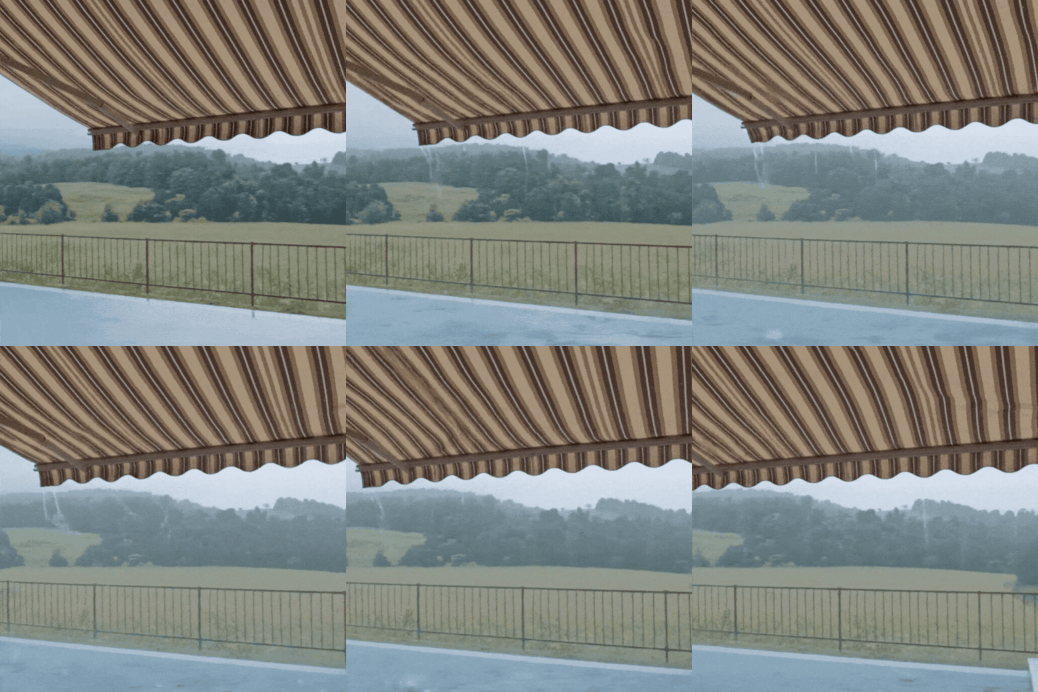
When homeowners ask about waterproof awnings, they’re usually responding to a real frustration: a rain shower rolls through and suddenly the patio furniture is wet, or they’re cut short mid-meal by a passing storm. A properly specified waterproof awning addresses that directly.
As a factory-authorized Sunesta dealer, Paul Construction and Awning installs waterproof awning systems that are built specifically for conditions like those in Pennsylvania. These aren’t fabrics that merely resist light rain; they’re designed to handle heavier precipitation without sagging, leaking, or holding water in the canopy. Paired with the right pitch angle during installation, water runs cleanly off the edge rather than collecting in the fabric.
Customization is another strength of the Sunesta line. Homeowners can choose from over 100 fabric options and multiple frame color finishes, so the awning integrates naturally with the home’s existing palette rather than reading as an afterthought. Size options accommodate everything from a modest patio to a full deck run. Whether you’re primarily concerned with sun, rain, or both, there’s a configuration that fits.
Common Awning Problems and How to Get Ahead of Them
Severe Pennsylvania weather exposes whatever weaknesses exist in an awning system, which is why regular attention between seasons pays off. Most issues that become expensive repairs started as minor problems that were easy to miss or easy to put off.
Electrical and motor issues. Motorized awnings can develop electrical faults after significant weather events. A blown fuse is a quick fix, but short circuits or motor failures often require professional evaluation. If your awning is hesitating, moving unevenly, or not responding to the remote, don’t keep forcing it — get a technician to look at it before the issue compounds.
Fabric wear and damage. Small tears or fraying can usually be patched. Larger damage, or fabric that has accumulated enough patches to look worn, is better handled with a full fabric replacement. The goal isn’t just aesthetics; compromised fabric lets moisture through and can stress the frame unevenly.
Deciding between repair and replacement. This comes up often, and the honest answer is that it depends on the extent of the damage and the age of the system. Minor repairs on a well-maintained awning are almost always cost-effective. But an awning that has been repeatedly patched, shows significant fading, or has mechanical components nearing the end of their useful life may be better served by replacement. Our team can assess that clearly and give you a straight answer either way.
For complete guidance on troubleshooting and care, our awning maintenance and care page walks through seasonal checklists, warranty information, and what to watch for across all major awning components.
A Practical Maintenance Routine That Protects Your Investment
Consistent, simple maintenance is what separates an awning that looks great at year ten from one that’s showing its age at year four. None of it is complicated, but it does require some regularity.
Seasonal cleaning. Mild soap and water, applied with a soft brush, removes the dirt, pollen, and organic buildup that accumulates through the season. The one rule to follow: always let the awning dry fully before retracting it. Trapping moisture against the fabric promotes mildew growth and degrades the material from the inside.
Hardware inspection. After significant storms, take a few minutes to look at the mounting brackets, arm connections, and fasteners. Look for signs of rust, loosening, or stress on the connection points. These are quick checks that can catch problems before they escalate.
Motor and sensor testing. In spring and fall, run the awning through its full range of motion and test the remote, any sensors, and the wall switch if applicable. Lubricate moving parts annually. If anything feels resistant or sounds unusual, schedule a professional evaluation before the peak season begins.
Retract during severe weather. This is straightforward but worth stating clearly. During high winds, heavy storms, and the winter months, the awning should be retracted and stored. Motorized systems with wind sensors handle this automatically for most situations, which is one of the practical arguments for choosing a motorized installation in a region with active summer storm seasons.
Our awning maintenance and care services are available for homeowners who’d rather have a professional handle seasonal inspections and tune-ups, or for situations where something needs repair and a DIY assessment isn’t giving a clear answer.
Getting the Most Out of Your Outdoor Space
An awning works best when it’s part of a broader outdoor living plan. The families we work with across Montgomery, Bucks, Philadelphia, Camden, and Gloucester counties aren’t just looking for shade — they’re building spaces where their kids play, where they host dinners, and where they genuinely want to spend their time. A well-chosen, properly installed, and consistently maintained awning makes all of that more comfortable and more usable across more months of the year.
If you’re thinking about a new installation, have questions about an existing system, or want a professional to evaluate what your awning needs heading into a new season, we’re glad to help. Every project starts with an on-site consultation and a straightforward conversation about what makes sense for your home.
Schedule your free estimate and let’s talk through it.