

Philadelphia summers are not subtle. From late June through August, afternoon temperatures routinely climb into the high 80s and 90s, and the humidity makes every degree feel heavier. You look out at the outdoor kitchen you invested in and feel that familiar frustration: it’s there, but the heat makes it hard to enjoy
Shade solves more than a comfort problem. The right overhead structure changes how a cooking zone functions: surfaces stay cooler, glare on prep areas drops, appliances last longer without the constant UV beating, and guests can gather near the grill without retreating every 20 minutes. Designing an outdoor kitchen in the Philadelphia region without addressing shade is like finishing a basement without planning the lighting.
Why Shade and Outdoor Kitchens Belong Together From the Start
The most common mistake homeowners make is adding an outdoor kitchen first, then trying to retrofit shade later. The two systems need to be designed in tandem. Design choices such as the placement of a grill, the depth of a countertop run, and the direction a kitchen faces are affected by where a roof or awning will land.
For kitchens that get significant west-facing afternoon sun, the sun angle in July means you’re cooking dinner while facing the glare of a setting sun. A properly positioned overhead structure eliminates that entirely.
Ventilation is the other variable. An outdoor kitchen under a full roof needs enough air movement that smoke and heat from the grill don’t collect. This is why the design of the roof opening, any ceiling fans or vents, and the clearance height above the cooking surface all matter. A structure that’s too enclosed in the wrong spots makes grilling uncomfortable in a different way. Paul Construction’s in-house design and engineering team accounts for these factors before a single post goes into the ground.
Roof Structure Options for Outdoor Kitchens in the Philadelphia Area
Fixed Roof Structures
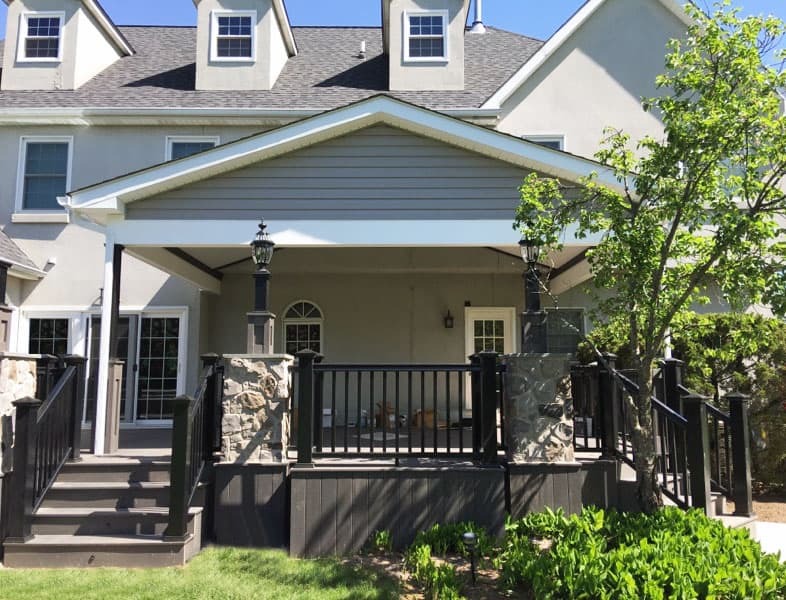
Whether it’s a lean-to attached to the house or a freestanding gable structure, a solid roof provides the most consistent shade and weather protection. For outdoor kitchens, this is often the strongest choice because it protects both the cook and the equipment from rain, sun, and the debris that settles on surfaces over a season.
Paul Construction’s roof structures can be finished with several surface options depending on your goals. Asphalt shingles matched to your home’s existing roofline create a seamless transition and are well-suited to Philadelphia’s four-season conditions. Standing seam metal roofing is increasingly popular for covered outdoor spaces because of its longevity, its clean sight lines, and its ability to shed water quickly. Metal roofing can also reflect solar heat, which has a measurable effect on the temperature of the space underneath during peak summer hours.
Metal Roof Panels for Patio Covers
A metal roof on a patio structure is different from a traditional architectural metal roof on the main house, but they’re installed with the same principles: proper flashing, concealed or exposed fasteners depending on the panel profile, and drainage built into the design from the start. Standing seam panels over an outdoor kitchen create a modern profile and hold up well in the freeze-thaw cycles that Pennsylvania winters produce.
One advantage specific to kitchens: metal roofing does not absorb moisture or harbor mold the way older fabric or wood-panel covers can. Over five or ten years, that matters for a space that sees steam, grease, and weather in combination.
Open Pergolas with Retractable Canopies
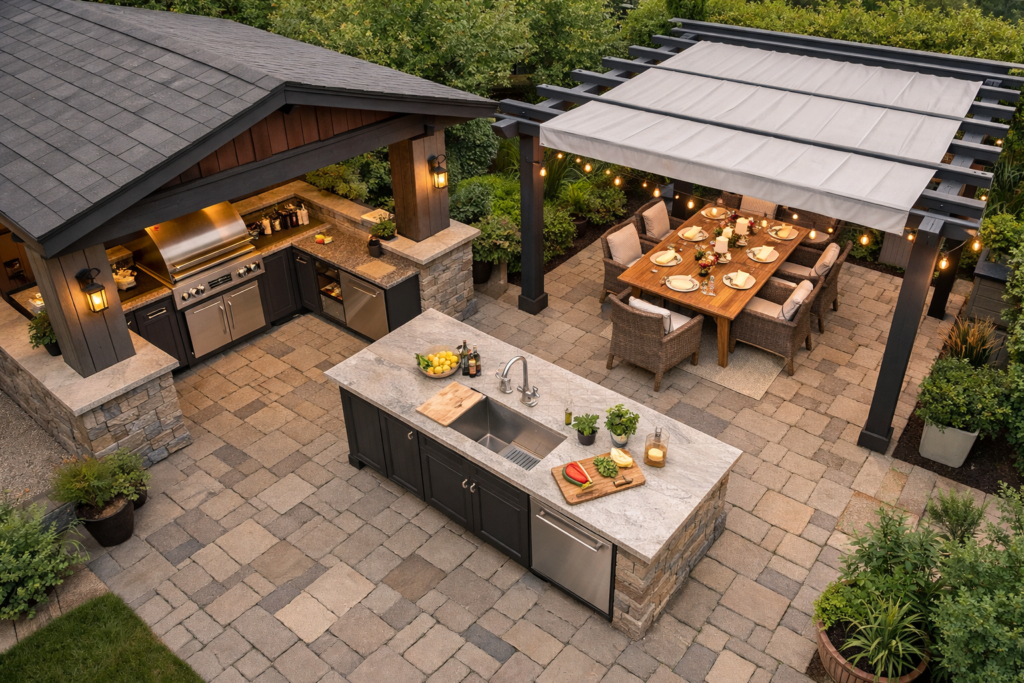
An open-frame pergola alone provides partial shade at best. The gaps in the beam pattern track with the sun, so the shade shifts considerably through the day. For a cooking and prep zone where you want consistent coverage, a pergola is more effective when paired with a retractable canopy that can be deployed during peak sun hours and retracted when clouds come through or when you want the space to open up in the evening.
Retractable awning systems can be motorized or manual to suit your preferences. Modern systems can also be tied to wind sensors that retract automatically in gusts, which is relevant in a region where summer afternoon storms come in fast.
Retractable Screens: The Underused Element in Outdoor Kitchen Design
Most homeowners think about shade from above, but direct afternoon sun and insects often come from the sides. Retractable screens add a layer of control that fixed roofs alone don’t provide. Deployed along the west face of a covered patio, a screen can knock out low-angle afternoon glare without blocking airflow. This makes a meaningful difference in perceived temperature compared to shade alone.
Screens also define the cooking zone visually and give guests a sense of enclosure without closing the space off entirely. In the Greater Philadelphia area, where mosquitoes are active from May through September, that added protection extends the comfortable hours of use into the evening.
A Practical Shade-Planning Checklist for Outdoor Kitchens
Before finalizing any outdoor kitchen design, work through these considerations with your contractor:
- Sun orientation: Identify which direction the cooking zone faces and when direct sun hits the grill and prep surfaces during peak use hours (typically 4 PM to 8 PM in summer).
- Roof clearance above the grill: The overhead structure needs adequate height above cooking appliances to allow smoke to escape and prevent heat buildup. Industry guidance typically points to a minimum of 7 to 9 feet above cooking surfaces, depending on the grill type.
- Ventilation planning: Any enclosed or semi-enclosed roof should account for airflow, especially when the kitchen includes a smoker, pizza oven, or multiple burners.
- Material compatibility with outdoor kitchen finishes: The roof structure’s materials should be durable enough to handle grease, moisture, and heat exposure over the years without significant maintenance demands.
- Drainage: Gutters and downspouts on a covered kitchen need to be positioned so that runoff doesn’t land on the counter or dining surface.
- Screen and awning integration: If retractable elements are part of the plan, their mounting locations need to be built into the structural framing from the start, not bolted on as an afterthought.
Different Kitchen Zones Have Different Shade Needs
A common mistake in outdoor kitchen planning is treating the entire cooking area as a single zone that needs identical coverage. In practice, the grill station, prep counter, and dining or bar area each have different requirements.
The grill station generates its own heat and light. Overhead shade is about reducing the ambient temperature and sun glare more than blocking rain, since many cooks prefer the grill uncovered or at least at a higher clearance. The prep and serving counter benefits most from consistent shade because you’re working with food surfaces that can heat up quickly in direct sun, and you’re spending time standing stationary in one spot.
The dining or bar area is where guests congregate, and here, shade comfort, aesthetics, and some wind or insect protection often matter more than any structural consideration. This is where a custom patio with integrated overhead coverage and retractable screens creates the most noticeable quality-of-life improvement.
Roofing Material Considerations for Philadelphia’s Climate
Choosing the right roofing material for a patio structure in the Philadelphia region means planning for a range of conditions: summer humidity, occasional thunderstorms with significant wind, heavy snowfall in some winters, and UV exposure across all four seasons.
Asphalt shingles matched to the main home create visual continuity and are well-established as a durable choice for attached patio covers. For freestanding structures with a more contemporary profile, standing seam metal roofing offers a lifespan of 50 years or more with minimal maintenance — well beyond what fabric canopies or wood-panel covers will deliver. Metal also sheds snow load effectively, which is a practical advantage for a structure you may want to use in shoulder seasons. According to Paul Construction’s roofing installation page, quality metal roof systems can reduce cooling costs by reflecting solar heat, a measurable benefit when the structure sits directly adjacent to your home’s back wall.
Whatever material is chosen, proper flashing where the patio roof ties into the main house is non-negotiable. A poorly flashed connection is the most common source of water intrusion in attached patio covers, and it typically doesn’t show up until a few seasons in.
Putting It All Together
An outdoor kitchen in the Philadelphia area that’s designed with shade from the start functions better, lasts longer, and sees more use than one that treats coverage as an add-on. The structure overhead shapes how the whole space works: where people stand, how hot surfaces get, how long guests stay, and how many months per year the kitchen is genuinely usable.
Working with a contractor who handles both the structural roofing and the retractable awning and screen components means those systems are designed to work together rather than compete for mounting points, drainage paths, or sightlines.
Ready to Start Planning Your Outdoor Kitchen Shade System?
Paul Construction has designed and built outdoor living spaces across Greater Philadelphia and South Jersey for over 30 years. The team handles design, structural engineering, permitting, and construction under one roof. Together, we’ll coordinate your shade structure and kitchen layout from the first conversation.
Schedule a free consultation to walk through your space, sun exposure, and priorities with someone familiar with our region’s permit requirements and climate conditions. We serve homeowners across Montgomery, Bucks, Philadelphia, Camden, and Gloucester counties. Every project starts with an on-site consultation, in-house structural drawings, and full permitting support.
Check out our showroom at 4093 Skippack Pike, Skippack, PA.