


September in Montgomery and Bucks County has a particular rhythm. The days are still warm enough for dinner outside, but the mornings carry that first real hint of cold — the kind that reminds you winter is coming whether the deck is ready for it or not. After a full season of cookouts, pool days, and Philadelphia humidity, a lot of decks around Greater Philadelphia are showing it: faded boards, a railing that wobbles more than it used to, fasteners starting to work loose.
Before the weather turns for good, it’s worth knowing the difference between a deck that needs a season of care and one that’s actually reached the end of its life. Deck restoration and refinishing can add years to a structure that’s still sound — but only if the work happens before winter, not after.
It’s the same pattern from Skippack to Doylestown, King of Prussia to Ambler: a deck that got heavy use all summer starts showing wear by September, and by the time anyone gets around to a serious look, the first frost isn’t far off. Getting the work done now, before the holidays and before winter weather makes it harder, means starting next spring with a deck that’s ready instead of one more thing on the list.
The same is true across the river in South Jersey — Cherry Hill, Voorhees, Woodbury, Mullica Hill — where decks get just as much late-summer use and the same fall window applies before the ground freezes and outdoor work gets harder to schedule.
The Signs Your Deck Needs Restoration
Most decks send warning signs long before they need to be torn out. Graying or faded boards, surface splinters, chalky or peeling stain, and minor cracking are all typical wear — especially on hardwood decking like Ipe, which needs periodic refinishing to keep its color and grain from turning silver-gray. Composite decking from Trex or Fiberon holds up differently: it won’t rot, but heavy summer use can leave it dull, stained, or scuffed, and it benefits from a thorough cleaning and inspection of the fasteners and framing underneath.
Loose boards, a handrail with more give than it should have, and gaps opening up between boards are also common by late summer — and all of them are fixable if the underlying frame is still solid.
Stairs and railings tend to show wear before the deck surface does, since they take the most direct contact — hands on railings, feet on stair treads, weight shifting side to side. If a railing has more flex than it used to, or a stair tread feels different underfoot than it did last year, that’s usually the first sign worth addressing, even before the boards themselves look bad.
What Deck Restoration and Refinishing Actually Involves
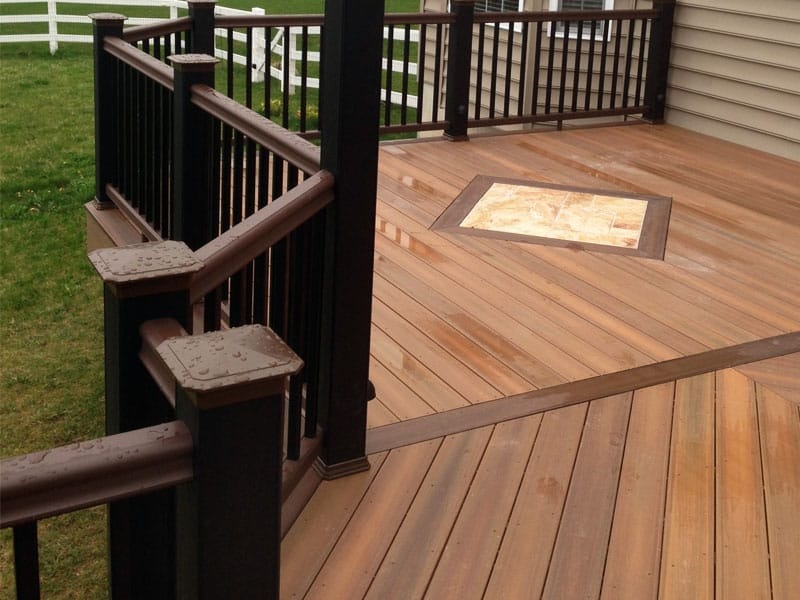
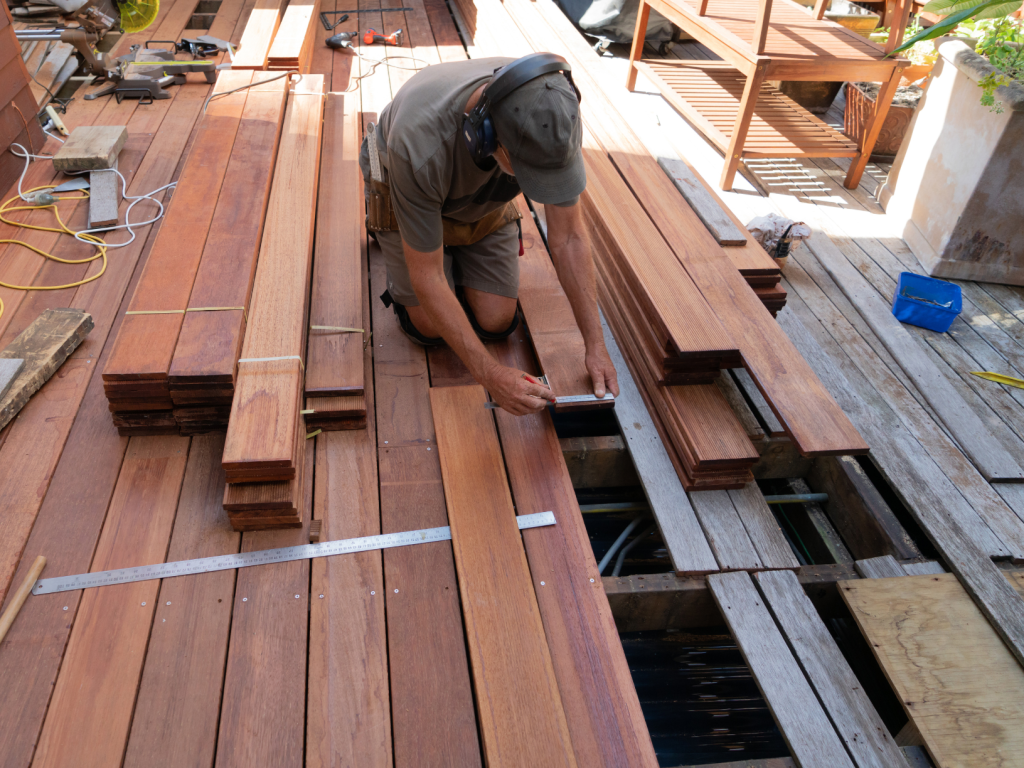
A proper deck restoration starts with a pressure wash to strip old finish, dirt, and mildew down to bare wood or clean composite. From there, our crews inspect every board and fastener, replace anything damaged, and re-secure hardware that’s worked loose over the season. For hardwood decking, that’s followed by sanding and a fresh coat of stain and sealant, matched to the original tone or updated to something new. For composite decking, restoration is more about resurfacing damaged sections, cleaning, and confirming the substructure is sound.
It’s detail work, and it’s the kind of thing that’s easy to skip until a board actually gives out. Done every few years, it’s a fraction of the cost of replacement.
The order matters. Pressure washing first means the sanding and staining happen on a genuinely clean surface instead of over trapped dirt and old finish, which is part of why a rushed job doesn’t hold up as well through a full winter. On the hardware side, screws and fasteners that back out over a season of temperature swings get reset or replaced before they become the kind of loose board someone catches a foot on.
Hardwood Decking: What Ipe Needs to Stay Protected
Ipe is one of the densest, most durable hardwoods used in decking, and it’s a material we work with often because it holds up to the Northeast’s weather better than most softwoods. But density doesn’t mean maintenance-free. Left unsealed, Ipe naturally weathers to a silver-gray patina — some homeowners like that look, but if you want to keep the deep brown tone it starts with, it needs a fresh coat of UV-protective oil or sealant every year or two, applied to a clean, dry surface. Restoration on an Ipe deck usually means a light sanding to open the grain back up, followed by that fresh coat of finish, plus a check of the fastener system, since Ipe’s density means it can shift slightly with temperature changes in a way softer woods don’t.
Composite Decking: What Restoration Looks Like for Trex and Fiberon
Composite decking from Trex or Fiberon doesn’t rot or need staining, which is part of why homeowners choose it — but low-maintenance isn’t the same as no-maintenance. A summer of grilling, pool splash, pollen, and foot traffic leaves a film on composite boards that a simple hose-down won’t fully remove, and it can dull the color if it sits through a winter untouched. Restoration on composite decking is mostly a deep clean with the right products for the specific composite material, paired with an inspection of the board fasteners, picture-frame trim, and the substructure underneath — since composite boards can mask a framing issue that a wood deck would show more visibly.
Why It’s Worth Bringing in a Professional Crew
A lot of what looks like a cosmetic problem — a soft spot underfoot, a railing that flexes, water pooling in one corner — is often telling you something about what’s happening underneath the boards. Our crews check framing, footings, and fastener condition as part of every restoration, not just the surface finish. That’s the difference between a deck that looks better for one season and one that’s actually protected going into winter.
It’s also why restoration work from Paul Construction & Awning is backed by the same Lifetime Workmanship Guarantee as a full installation. Our name is on it whether we’re building a deck from scratch or bringing an existing one back to where it should be.
That inspection is also where we catch the kind of problem that’s cheap to fix in September and expensive to fix in March — a ledger board pulling away from the house, a footing that’s shifted, flashing that’s let water behind the siding. None of that shows up on a quick visual pass, but all of it gets easier to ignore once the deck is covered in snow.
What Waiting Costs You
None of this is urgent in the way a burst pipe is urgent — a deck that needs restoration in September will still be standing in September of next year. But every winter a loose fastener, a soft spot, or exposed wood that sits untreated is a winter that has a chance to get worse. Ice works its way into small cracks and expands them. Water that’s been sitting in an unsealed board freezes and pushes the grain apart. A repair that would have been a day of restoration work in the fall can turn into board replacement — or more — by the time spring rolls around. Getting ahead of it now is almost always the cheaper, faster path.
Restoration as Part of a Bigger Outdoor Living Plan
A lot of the decks we restore aren’t standalone — they’re attached to a pergola, sit under a section of roof structure, or connect to a patio. If you’re already thinking about adding shade, a retractable awning, or a covered structure to the same space, fall restoration work is a natural time to talk through both projects together, since some of the same crew time and access points overlap. It’s also worth asking about our Three-Point Promise, which covers investment, satisfaction, and workmanship on any project we take on, restoration included.
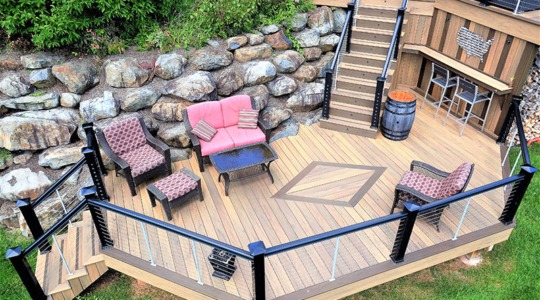
Restoration around built-in features — benches, planter boxes, post caps, string lighting — takes a little more care than an open deck surface, since each of those has to come off, get set aside, and go back on without damaging the finish underneath. It’s worth mentioning any built-ins when you schedule your estimate so the crew can plan for them.
When Restoration Isn’t Enough
Not every deck is a restoration candidate. Rot in the framing, failing footings, or structural movement in the posts are signs a deck has gone past what refinishing can fix — and pushing it through another winter of ice and snow load isn’t worth the risk. If that’s where your deck is at, it’s time to talk about a custom deck installation built from scratch for your home, whether that’s Ipe hardwood, cedar, or a low-maintenance Trex or Fiberon composite.
Why Fall Is the Right Time to Do This in Greater Philadelphia
Late summer and early fall are the best window for deck restoration and refinishing in our area. Humidity has dropped from its July peak, which means stain and sealant cure properly instead of trapping moisture underneath. And getting the work done now — before the freeze-thaw cycles of a Northeast winter start working on any exposed wood or loose fasteners — protects the investment you’ve already made instead of letting a small issue become a bigger one by spring.
This isn’t unique to Montgomery and Bucks County — the same freeze-thaw pattern hits South Jersey decks in Camden and Gloucester County too. Wherever you’re located in our service area, the logic is the same: get the moisture out, get a proper seal on, and let it cure before temperatures start dropping overnight.
What to Expect at the Estimate
When we come out for a free estimate, we’re not just eyeballing the surface. We’ll walk the full deck, check the framing from underneath where it’s accessible, test the railings and stairs, and look at how the boards are holding up section by section, since sun exposure and drainage can make one side of a deck wear faster than the other. You’ll get a straight answer on what the deck actually needs, along with a written estimate before any work starts.
Frequently Asked Questions
Can a deck be restored more than once? Yes. Most wood decks go through several restoration cycles over their lifespan, spaced out as the finish wears down. Composite decking is restored less frequently since it doesn’t need staining, but periodic deep cleaning and hardware checks still apply.
How is restoration different from a full deck resurfacing? Restoration typically refers to cleaning, repairing, and refinishing what’s already there. Resurfacing usually means replacing the decking boards themselves while keeping the existing frame and footings — a step up in scope but still short of a full rebuild.
What if I’m not sure which one I need? That’s exactly what a free estimate is for. We’ll look at the frame, the boards, and the hardware, and tell you honestly whether you’re looking at restoration, resurfacing, or a full replacement — no guessing required.
Do you work on decks in every part of your service area? We serve homeowners throughout Montgomery, Bucks, and Philadelphia counties in Pennsylvania, and Camden, Gloucester, and Hunterdon counties in New Jersey. If you’re not sure whether your address falls inside that footprint, ask when you schedule your estimate.
Whether your deck needs a refresh or a full rebuild, the crew that put it up in the first place should be the one to tell you which. Paul Construction & Awning has been restoring, refinishing, and building decks across Greater Philadelphia and South Jersey for over 30 years, backed by our Lifetime Workmanship Guarantee. Instantly Schedule Free Estimate! or call 610-287-1623 — ask for Paul.