
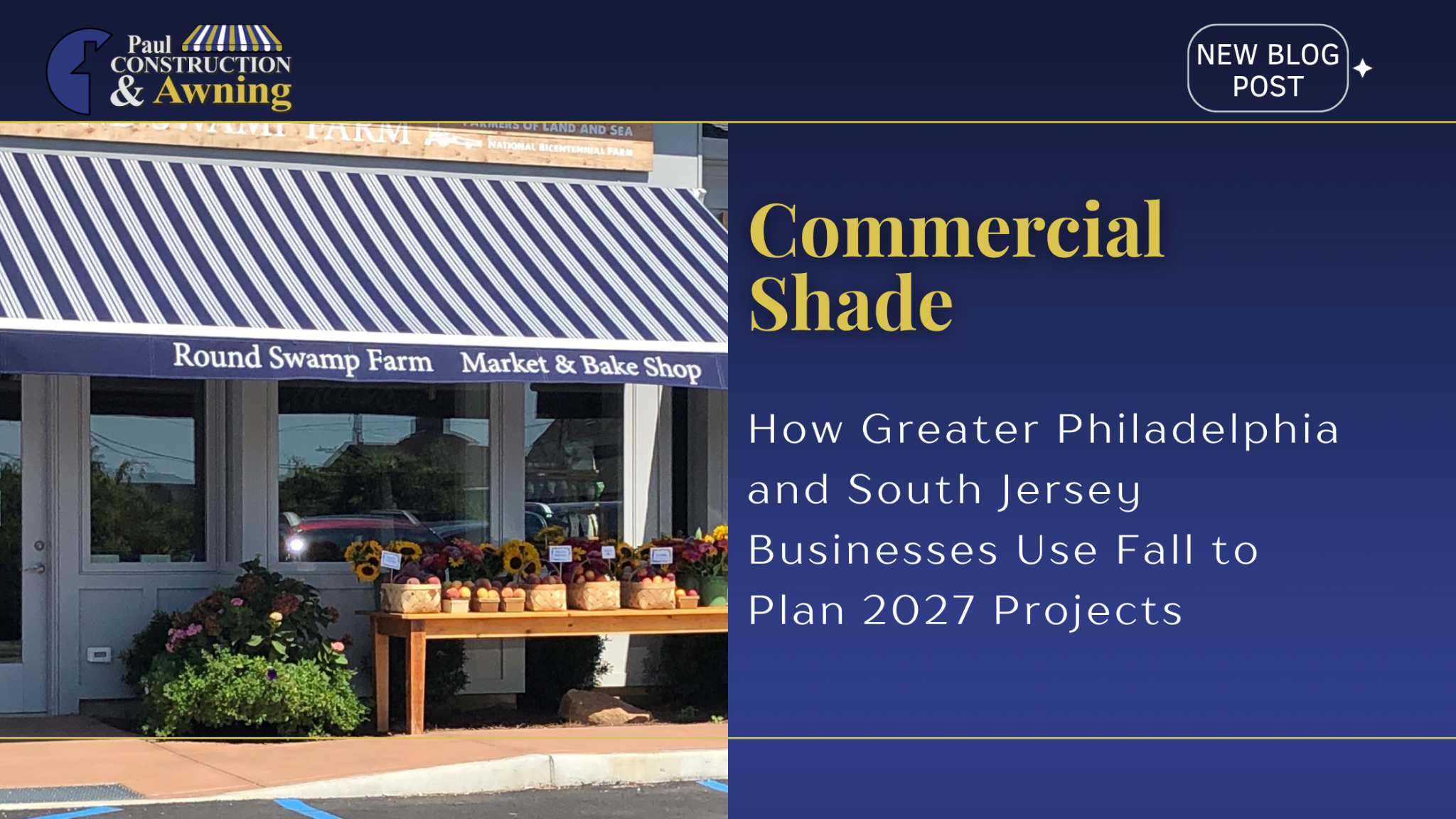

Every spring, the same conversation happens across Montgomery County, Bucks County, Philadelphia and South Jersey. A restaurant owner looks at a patio that’s about to be the most profitable twelve feet of the building, realizes it needs a commercial shade structure or some combination of cover and wind protection to work properly, and calls a contractor in April.
By the time the design, approval and fabrication are done, it’s July. The season they were building for is half gone.
The operators who don’t have that conversation are the ones who had it last October instead.
Why fall is the planning season, not the building season
Fall isn’t when commercial outdoor work gets installed. It’s when it gets decided, and those are different jobs with different calendars.
Your numbers are in front of you. In October you know what this season actually did. You know which tables turned and which sat empty, how many nights you lost to rain, how often you sent people inside because of wind off the parking lot. That’s real operating data, and it’s the only honest basis for a build. In April you’d be working from memory and optimism.
Your capital calendar is open. Most businesses set next year’s budget in the fall. An outdoor structure that gets scoped and priced in October is a line item in the 2027 budget. The same project raised in March is an unplanned expense competing with everything already committed.
Approvals take the time they take. Commercial work in this region can involve zoning review, permitting, a landlord, sometimes a historic district, sometimes a shared-use agreement with a neighboring tenant. None of that moves faster because you’re in a hurry. Starting the clock in the fall means the approvals run during the months you weren’t going to be building anyway.
You’re not competing with your own season. Construction on a patio in June costs you the patio in June. Construction in late winter costs you very little.
What “commercial outdoor structure” actually covers
The phrase is vague, so here’s what it means in practice for the businesses we work with around here.
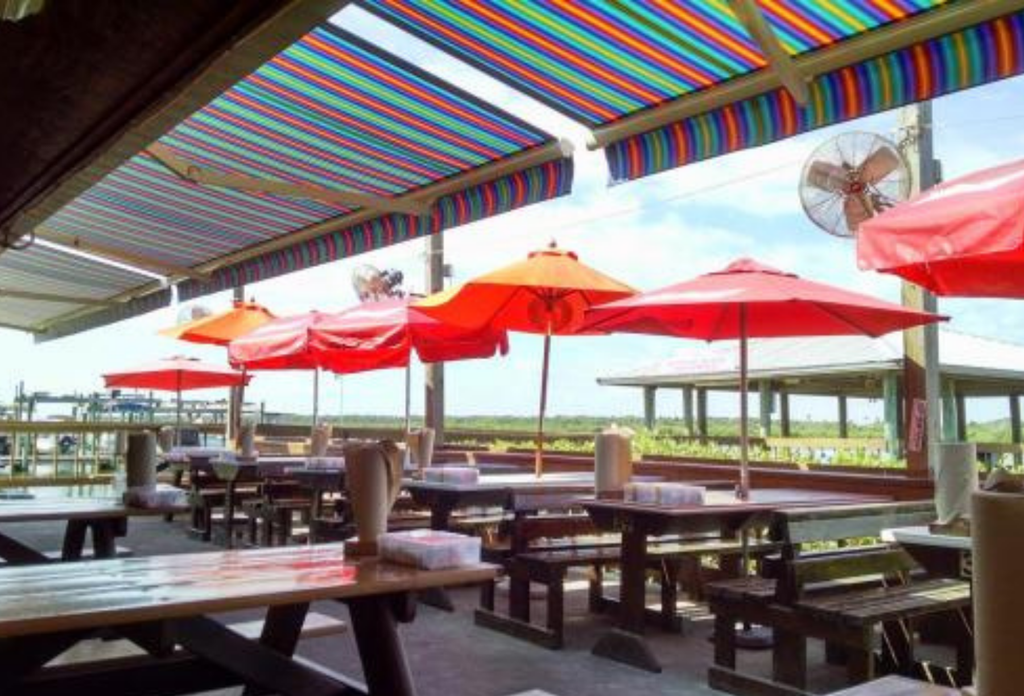
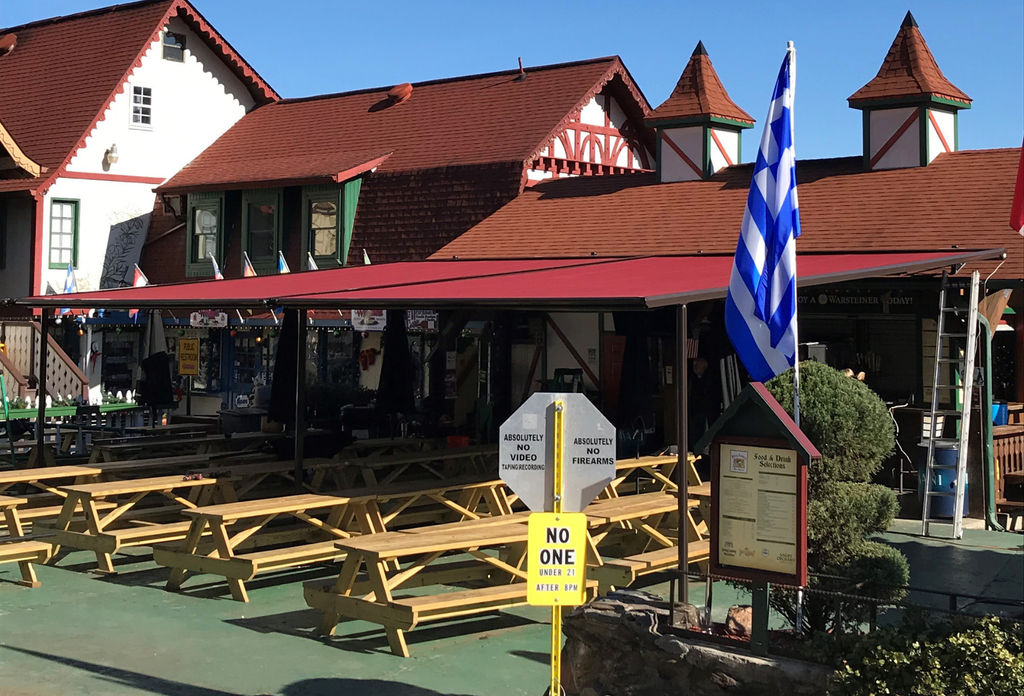
Retractable awnings over seating and entrances. A Sunesta retractable awning puts shade over a patio in seconds and takes it away just as fast when the weather turns. Sunesta systems are Miami-Dade hurricane certified, which is the certification worth asking any awning vendor about when a structure is going over your customers. Available motorized with wind and sun sensors, which matters when nobody on shift has time to think about the awning.
Retractable screens on large openings. This is the one most operators don’t know exists. Sunesta Sentry Screens handle openings up to 26 feet wide, and we regularly screen openings past 25 feet using multiple units on a single control. For a restaurant, that’s the difference between a patio that closes when the bugs arrive at dusk and one that keeps serving. Clear vinyl panels extend it further into cold weather without losing the view — or the sightline to your signage.
Permanent covered structures. Post and beam roof structures and pergolas, engineered for the specific footprint and built to hold up to Northeast winters. These are the projects with the longest approval timelines and the strongest argument for starting in the fall.
Climate-controlled outdoor rooms. A Remote Space pairs retractable screen walls with ductless mini-split heating and cooling. For a business, this converts a seasonal patio into year-round covers — the same square footage working twelve months instead of five.
The question to answer before you call anyone
Not “what should we build.” The useful question is narrower:
How many nights did you lose this year, and to what?
Rain is one answer. Wind is a different answer with a different solution. Insects at dusk is a third. Sun on the west-facing tables between 4 and 7 is a fourth, and it’s the one operators most often misdiagnose as “that section just doesn’t turn.”
Each of those has a different structure attached to it, at a different cost. An operator who walks in knowing which one is actually costing them gets a proposal that solves the real problem instead of the expensive one.
We can help you figure that out. But you’ll know the answer faster than we will, because you were there.
What working with us looks like
We’ve been building outdoor structures across Greater Philadelphia and South Jersey since 1994, out of our showroom in Skippack. Design, engineering, permitting and construction are handled in-house — one team, one number to call, one party accountable when something needs to move.
For a commercial client that in-house model matters more than it does for a homeowner. You have a season to protect, a landlord to answer to, and inspections that have to line up. Coordinating that across separate design, permit and build vendors is how a spring opening becomes a July opening.
Every plan is drawn by hand for the specific site. Our work carries the Lifetime Workmanship Guarantee, and you can see thirty years of finished projects in our portfolio.
Start the 2027 conversation now
The businesses that open next season with a working outdoor space are the ones having this conversation in October, not in April.
We’ll come out, walk the space with you, and tell you honestly what it needs and roughly what that costs — early enough that it can go in the budget rather than around it.
Instantly Schedule Free Estimate! Or call 610-287-1623 — ask for Paul.